
Journal
Lower-back stiffness: gentle options at home
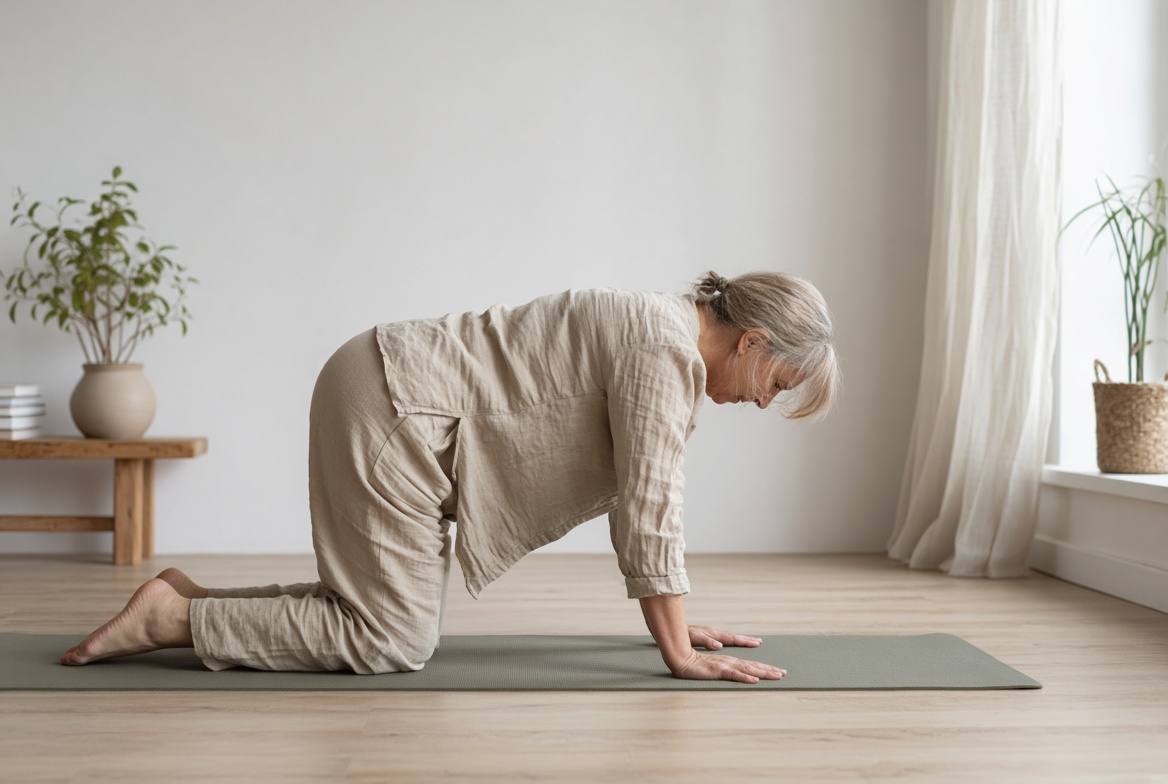
Most adults will feel the lower back complain at some point — after a long drive, a poorly judged lift from the floor, or a week of sitting harder than usual. The majority of those episodes settle with time, walking, and simple control work. A minority are fractures, infections, nerve compression that needs prompt review, or pain referred from the hip. The first job of a web page is to send the minority away from homemade mobility and toward a person who can examine them.
If you have already been cleared for gentle movement, the ideas below are a conservative starting set: move the spine through a small range, teach the hips to take some of the bending, and use walking as the main dose. They are written for everyday stiffness in adults, including people in later decades of life. They are not a protocol after spinal surgery and they are not a treatment for sciatica that is worsening week by week.
Why the back gets noisy
The lumbar spine likes a mix of motion and stability. Hours in one chair flatten that mix. Weak hips shift bending into the lower back. Extra body weight changes the lever arms around the pelvis. Sleep loss and low mood also turn the volume up on pain, which is why a purely “stretch it” story often fails.
BMI is a blunt cousin of that load story. If you want the number, use the BMI calculator and then read where the index fails. Walking minutes and sit-to-stand quality are better weekly scores than any website ratio. Energy planning, if a clinician has agreed it is relevant, lives on the calorie calculator and the meal framework, not in a crunch video.
Discs, joints, ligaments, and the nerves that exit the spine can all speak. A website cannot tell them apart. What it can do is keep your first experiments small enough that you can tell the next morning whether you helped or irritated the pattern.
Red flags, said again because they matter
- Trauma, especially in someone with osteoporosis or on long-term steroids.
- Fever, unexplained weight loss, or a history of cancer with new back pain.
- Saddle numbness, new incontinence, or inability to urinate.
- Progressive leg weakness or foot drop.
Those lists exist in every reputable public-health back-pain leaflet for a reason. Do not test them with cat-camel. Knee-only issues without back symptoms have their own page: gentle knee mobility.
Floor options
Cat-camel. On hands and knees, round the back slowly, then let it sag a little. Stay away from the end of the range if it pinches. Five to eight cycles is a session, not a workout. If kneeling bothers the knees, do pelvic tilts on your back instead.
Hook-lying march. Lie on your back, knees bent, feet down. Lift one foot an inch and lower. This trains the trunk to stay quiet while a leg moves — useful before you pick a laundry basket off the floor.
Pelvic tilt. Same position. Gently flatten the low back into the mat, release. Think of a small nod, not a crunch.
Knee-to-chest, one side. Draw one knee toward the chest only as far as the back stays calm. Hold a few breaths. Skip this if it reproduces leg pain that travels below the knee.
Standing options
Hip hinge to a counter. Soft knees, push the hips back, keep the back long, stand up. This is the pattern you want when you close a car boot or take food from a low shelf. It is not a toe-touch contest.
Sit-to-stand. Share work with the legs so the back is not the only mover. The same drill appears on the knee page because it trains both regions.
Easy walking. Ten minutes on level ground is a legitimate dose. Add time before hills. If you finish more crooked than you started, shorten the next walk.
Short standing extension. Hands on the low back, gentle lift through the chest. Some people with sitting-related ache like this. Stop if it increases leg pain.
What usually makes people worse
Aggressive hamstring stretching into a sharp pull, sit-ups for a “core,” twisting under load, and long bed rest past the first day of a flare. A short lie-down can settle a spike. Days in bed usually add stiffness. Getting a plan from a clinician matters if you cannot stand.
Weekend warrior patterns — five days still, then a long garden session — are as hard on the back as they are on the knees. Break the garden into two shorter blocks and stand up between beds.
Work, driving, and sleep
If you sit for work, stand up once an hour and do four pelvic tilts or a short walk to the kettle. In the car, bring the seat close enough that the knees are not locked. At night, a pillow between the knees on the side, or under the knees on the back, is enough equipment for most people. A mattress that is a few years past its life will not be fixed by one stretch.
Food, weight, and recovery
No salad treats a disc. Eating in a way you can repeat still helps the whole load-and-recovery picture. Use the anti-inflammatory foods list as a grocery list and the weeknight dinners when you want a plate that does not need a recipe app. If energy intake is part of a clinician-agreed plan, estimate a range with the calorie tool. Do not open a crash diet the week the back is angry; muscle you lose is muscle that will have to lift you later.
A weekly shape
Daily: walking plus cat-camel or pelvic tilts. Two or three days: hinges and sit-to-stand. One easier day after a flare. Keep a three-line diary: what you did, how the evening felt, how the next morning felt. That diary is more useful than any app badge.
Is a standing desk the fix?
Alternating sit and stand is better than either all day. Standing still in one posture can be as noisy as sitting.
Should I use a back belt at work?
Belts are a workplace decision. They do not replace hip strength or hinge skill. If you wear one, still practice the hinge without it at home.
Does heat help?
Heat can ease morning stiffness. Ice is more common after a sharp flare. Neither replaces assessment of red flags.
When is imaging useful?
Often later than people expect, and after an examination. Imaging decisions belong with the clinician who has seen you move.
Can I garden?
Yes if you hinge, switch tasks, and stand up before the back goes quiet-numb. Kneel on a pad and use a low stool.
Does BMI tell me why my back hurts?
No. It can describe load. Diagnosis needs an examination. Use the calculator as context only.
Public-health back-pain leaflets in the UK, US, and Australia agree on red flags, early walking, and caution with prolonged bed rest. This page follows that consensus in plain language. Related: knees, disclaimer.