
Journal
Gentle knee mobility you can try at home
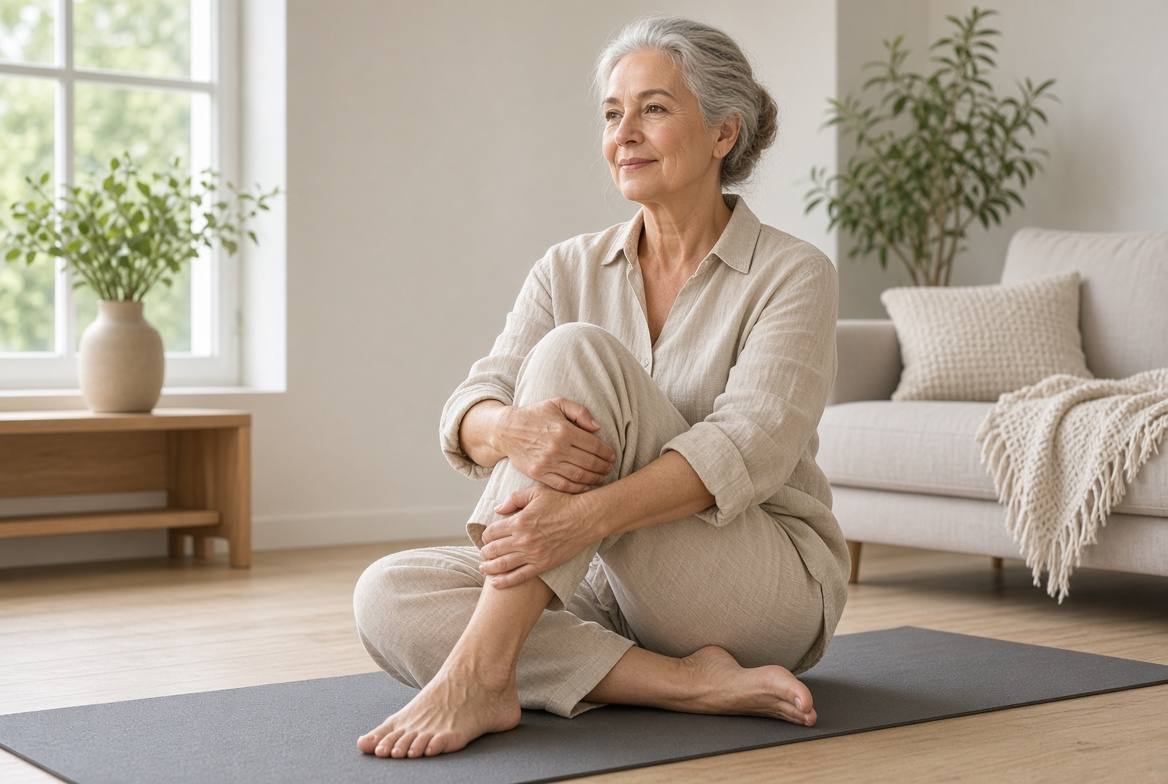
Knee discomfort is one of the most common reasons older adults cut walking, skip stairs, and then lose the strength they still need to stand up from a chair. Complete rest feels safe for a day or two. Past that, unused muscle and a joint that never moves through its range often feel worse, not better. The aim below is modest: keep the joint moving inside a calm range, load the muscles around it without dropping into a deep squat, and notice when the story is no longer stiffness but an injury.
None of this replaces an examination. Osteoarthritis, meniscus irritation, bursitis, referred pain from the hip or back, and post-surgical knees are different problems. If you already have a physiotherapist’s programme, follow that programme. Use this article to understand the logic, not to overwrite a plan written for your joint.
What everyday knee stiffness usually involves
Cartilage does not have the same blood supply as muscle. It depends in part on movement to shift fluid. Long sitting, then a sudden long walk, is a classic flare pattern. Extra body weight increases compressive load on the joint surfaces. The BMI calculator will not tell you how your cartilage looks, but it can put a number next to the load you carry all day. Read that number with the limits of BMI in mind: muscle, waist, and how far you can walk matter more than a single index.
Strength in the quadriceps at the front of the thigh and in the hip muscles changes how the knee tracks. Weak hips often show up as knees that collapse inward on a squat. Tight calves change how the ankle bends and can force the knee to take motion it does not love. That is why a knee page still talks about the hip and the foot.
Morning stiffness that eases after a few steps is a different pattern from pain that worsens the more you walk. The first pattern is common in degenerative change. The second can mean you simply did too much, or that something else is going on. Track which one you have for a week before you add hills or longer loops.
Red flags — stop and get care
- The joint is hot, red, and rapidly more swollen than yesterday.
- You cannot bear weight after a twist or a fall.
- The knee locks and will not straighten.
- Pain runs down the leg with pins and needles or foot drop.
- You have fever with a swollen joint.
Those are not “try heel slides” problems. Lower-back symptoms that travel with the knee also need a different look. Use lower-back stiffness at home only if a clinician has already ruled out urgent causes.
How to set up the room
Use a firm chair with armrests, a counter you can hold, and shoes with a little grip if you are standing. A yoga mat is optional. Work in a range that feels like stiffness or mild work, not sharp catching. Five to eight slow repetitions per side is enough on day one. Breathing out as you straighten or stand is usually more comfortable than holding the breath.
If a move increases swelling that evening, you went too far. Next session, cut the range in half. Progress is measured in easier stairs next week, not in copying a younger athlete’s video. Write down what you did. Memory is a poor training log after a flare.
Seated options
Seated knee extension. Sit tall, feet on the floor. Straighten one knee until the thigh works, pause one second, lower with control. Keep the thigh on the chair. If the kneecap feels scratchy at the top, stop a few degrees short of lock-out.
Heel slides on a chair. Keep the heel in contact with the floor. Slide it forward to straighten, then back to bend. This is useful when standing still feels unsafe.
Seated march. Lift one foot a few centimetres and lower. This is a control drill more than a stretch. People who get nervous on one leg can start here.
Towel squeeze (isometric). Sit with a rolled towel between the knees. Gently press inward for five seconds, release. Then place the towel under one knee and press the knee down into it. Isometrics are often tolerated when moving through a painful arc is not.
Ankle pumps while seated. Point and flex the foot. Swelling in the lower leg often eases when the calf muscle moves. This is not a knee stretch; it is circulation work you can do during a phone call.
Standing options, holding the counter
Sit-to-stand to a chair. Sit back toward the chair without dropping. Stand up without yanking the arms if you can. Keep knees roughly over the middle of the feet. This is the most useful daily-life drill on the list because it is how you leave every chair in the house.
Supported calf raise. Rise onto the toes, lower slowly. The calf and Achilles complex change how the knee is loaded on walking. Do not bounce.
Mini range squat. A quarter squat, counter for balance. If the knees cave in, make the stance a little wider and think “knees toward the little toes.”
Side steps holding the counter. Small steps left and right keep the hip muscles awake. Stop if the inner knee pulls sharply.
Walking is still a session
Ten minutes on level ground, in shoes that fit, is a legitimate dose. Add time before you add hills or uneven paths. If you limp more at the end than at the start, the walk was too long. Pair walking with the plate pattern on the meal framework if extra body weight is part of the load story, and use the calorie calculator only as a planning range — not as a crash diet the same week the joint is angry.
Uneven ground, wet leaves, and crowded shops ask more of the joint than a quiet pavement. Save those for weeks when the evening swelling stays quiet.
Ice, heat, and medicines
Ice is more common after a recent flare or after you overdid a walk. Heat can loosen morning stiffness before the seated work. Neither is a treatment for a locked or infected joint. Over-the-counter pain medicines have their own risks, especially if you take blood pressure or blood-thinning drugs. That decision sits with a pharmacist or physician, not with this article.
Weight, food, and the knee
Every extra kilogram is carried through the knee on every step. That is a mechanical fact, not a moral one. If you and a clinician have agreed that a modest energy change is appropriate, build plates from the anti-inflammatory foods list and the weeknight dinners. Do not start a 1,200-calorie menu because a joint is sore. Rapid loss that costs muscle often leaves the knee less supported, not more.
Protein at each meal helps you keep the thigh muscle you are training with sit-to-stand. The BMR calculator estimates the resting floor of energy use; the calorie tool adds daily movement. Neither tool diagnoses arthritis.
A simple weekly shape
Most days: seated extensions and heel slides, then a short walk. Two or three days: sit-to-stand and calf raises. One day easier if swelling rose. If both knees and the lower back complain, do not stack a long mobility session; pick the joint that limits walking and keep the other on maintenance.
Should I keep going if it clicks?
Painless clicking is common. Painful catching or locking is not. Stop the range that catches and get it checked if it repeats.
Is cycling better than walking?
Many people tolerate a well-fitted bike because the load is more predictable. A seat that is too low often irritates the front of the knee. Start with minutes, not miles.
Do I need a brace?
A simple sleeve can remind you the joint is there. A hinged brace is a clinical decision after injury or surgery. Braces do not replace strength work.
Can I kneel to garden?
Short bouts on a padded kneeler are fine for many people. Get up before the joint goes numb. Alternate with standing calf work so you do not live only on a bent knee.
How does this connect to BMI?
BMI estimates load, not cartilage quality. Use the BMI calculator as one number, then keep walking capacity as the better weekly score.
What if only one knee is involved?
Train both sides with a smaller dose on the quieter side so you do not hop into imbalance. Compare evening swelling, not just pain scores.
This article summarises common education themes used for non-urgent adult knee stiffness. It is not a single clinic protocol and it is not copied from another website. Related: lower-back page, BMI tool, disclaimer.