
Journal
Calorie-aware weeknight dinners
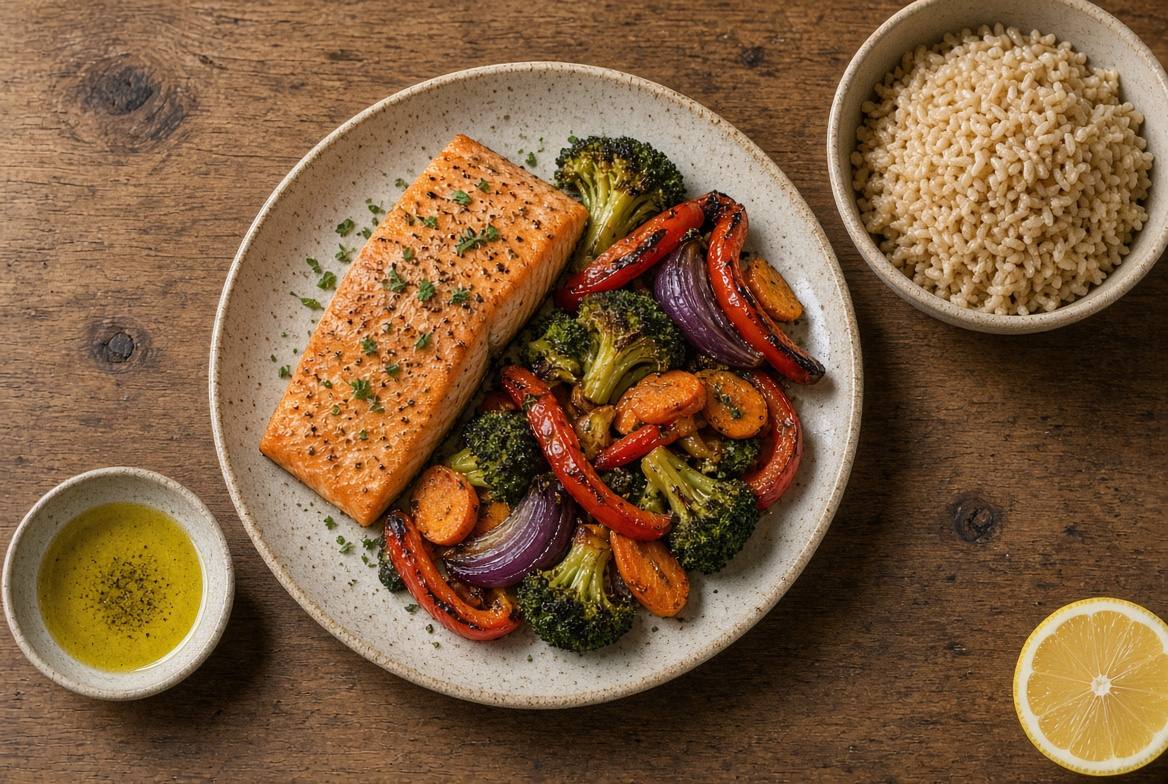
A useful dinner is one you can cook after work. These three plates follow the meal framework: protein, plants, a starch, and a fat you can see. Use the calorie calculator if you want a daily range. None of these plates is a 1,200-calorie script, and none of them treats disease.
Quantities are described in kitchen language — a fillet, a handful, a small bowl — because most people will not weigh dinner forever. If you and a clinician have agreed to track closely for a while, weigh for two weeks to learn your usual portions, then return to eyes and palms.
1. Salmon, roast vegetables, brown rice
Bake a salmon fillet until it flakes. Roast broccoli, peppers, and carrots with a spoon of extra-virgin olive oil. Serve with a small bowl of brown rice and lemon. This plate sits on the anti-inflammatory list without extra ceremony. Tinned salmon works when you do not want to heat an oven for fish.
Leftover vegetables become lunch with beans or eggs. That is the point of a tray: tomorrow is already half done.
2. White-bean tray with tomatoes and greens
Warm tinned white beans with cherry tomatoes, garlic, and spinach. Finish with oil. Add a slice of good bread if you want starch, or leftover rice. This is the cheapest plate on the page and the one that survives an empty fridge best.
If beans bother your gut, start with a smaller portion and walk after dinner. Sudden fibre jumps are a common reason people abandon a good pattern.
3. Sheet-pan chicken and mixed vegetables
Chicken thighs or breast, onions, courgette, and carrots on one tray. Season simply. Pair with potatoes or quinoa. Leftovers become tomorrow’s lunch, including a cold plate with extra leaves.
People looking after knees often prefer tray cooking because it cuts standing time. Use a chair at the counter for chopping if the back is noisy that day.
How this meets a modest deficit
If your calculator estimate is about 2,000 kcal, a modest change is usually a few hundred calories across the day — not skipping dinner. Keep protein on the plate so the meal still satisfies. The BMR calculator is the resting floor; do not eat at that floor because a tray bake felt virtuous.
BMI is optional context, via the BMI calculator and its limits. Clothes, walking, and whether you can repeat the dinner next Tuesday are better scores.
Flavour without a second recipe book
Lemon, garlic, pepper, paprika, parsley, yogurt on the side. That list covers all three plates. Shop once. Repeat. If you want heat, add chilli flakes at the table so the rest of the household is not forced into your preference.
Batching a week
Roast two trays on Sunday. Cook a pot of starch. Keep yogurt and fruit for the edges of the day. Eat the fish plates earlier in the week. Bean plates keep. This is not meal-prep culture as a hobby. It is a way to avoid the 19:00 packet.
Can I batch-cook these?
Yes. Roast two trays at once and keep portions in the fridge for two or three days.
Do I need to weigh every gram?
Only if you and a clinician have agreed to track closely. Most people do better repeating the plate shape.
What about dessert?
Fruit or yogurt is the default. A planned baked thing once or twice a week does not ruin the framework.
Can I use frozen fish and vegetables?
Yes. That is how this stays affordable and fast.
Is this a diet?
It is a dinner pattern. Call it a diet only if that word helps you repeat it.
Templates only. Related: framework, disclaimer.
Swaps that keep the three plates intact
Salmon becomes trout or tinned sardines. Chicken becomes turkey or tofu. Rice becomes potatoes. Broccoli becomes frozen mixed vegetables. Oil stays. Lemon stays. If a swap removes protein, add beans or eggs back. If a swap removes plants, the plate has slipped into “meat and starch” and will not carry the week.
Guests can eat these dinners without being announced into a programme. That matters. Food that isolates you from the people at your table does not last. Season a guest portion more freely if they asked for it. Keep your own oil measured with a spoon if you are in a tracking fortnight.
For the theory behind the shape, stay on the framework page. For the shopping list logic, stay on the foods list. Dinners are only the Tuesday evening version of both.
If cooking energy is low
Use the bean plate. Open a tin, wilt frozen spinach in the same pan, add oil and lemon, eat with toast. That dinner takes less time than delivery and still has the four parts. Keep those tins visible, not behind baking trays you never use.
Microwave rice pouches are allowed. Frozen grilled vegetables are allowed. The test is whether protein and plants landed on the plate, not whether a food photographer would approve the steam.
If even that feels like too much for several days, the problem may not be dinner. Appetite collapse, new pain, or sadness that takes the kitchen away belongs with a clinician. The site can wait.
Leftovers without boredom
Chicken becomes a wrap with leaves and yogurt. Salmon flakes onto warm rice with extra lemon. Beans become a toast topping with tomato. Changing the vehicle — bowl, wrap, toast — is cheaper than changing the recipe. Keep one fresh item, usually a herb or a lemon, so yesterday’s tray does not taste like yesterday’s tray.
Freeze one portion from the double roast if midweek looks busy. Label it. Unlabelled frozen dinners become archaeology. Related reading if the issue is size rather than cooking: what BMI is and limits.
Nine hundred words would have been a recipe card. The extra length here is deliberate: swaps, low-energy cooking, leftovers, and the refusal to turn dinner into a crash plan. If you only cook one thing from this page, cook the bean tray this week and the salmon tray next week. Two dinners, repeated, beat seven new tabs.