
Journal
Anti-inflammatory foods worth cooking this week
Dietary patterns associated with lower inflammatory markers look ordinary on purpose: plants, extra-virgin olive oil, fish, beans, and not much ultra-processed snack food. That is a grocery list, not a cleanse, not a juice protocol, and not a replacement for prescribed care. This article is the long version of that list, with notes on how to cook from it and how it sits next to the calculators on this site.
“Anti-inflammatory” is a popular label. In research it usually refers to patterns such as Mediterranean-style eating, not to a single spice in a capsule. Blood markers such as C-reactive protein move with overall diet, weight change, infection, and smoking. A Tuesday salad does not cancel a medical diagnosis. Keep that sentence in mind when a headline promises otherwise.
Build the basket around these foods
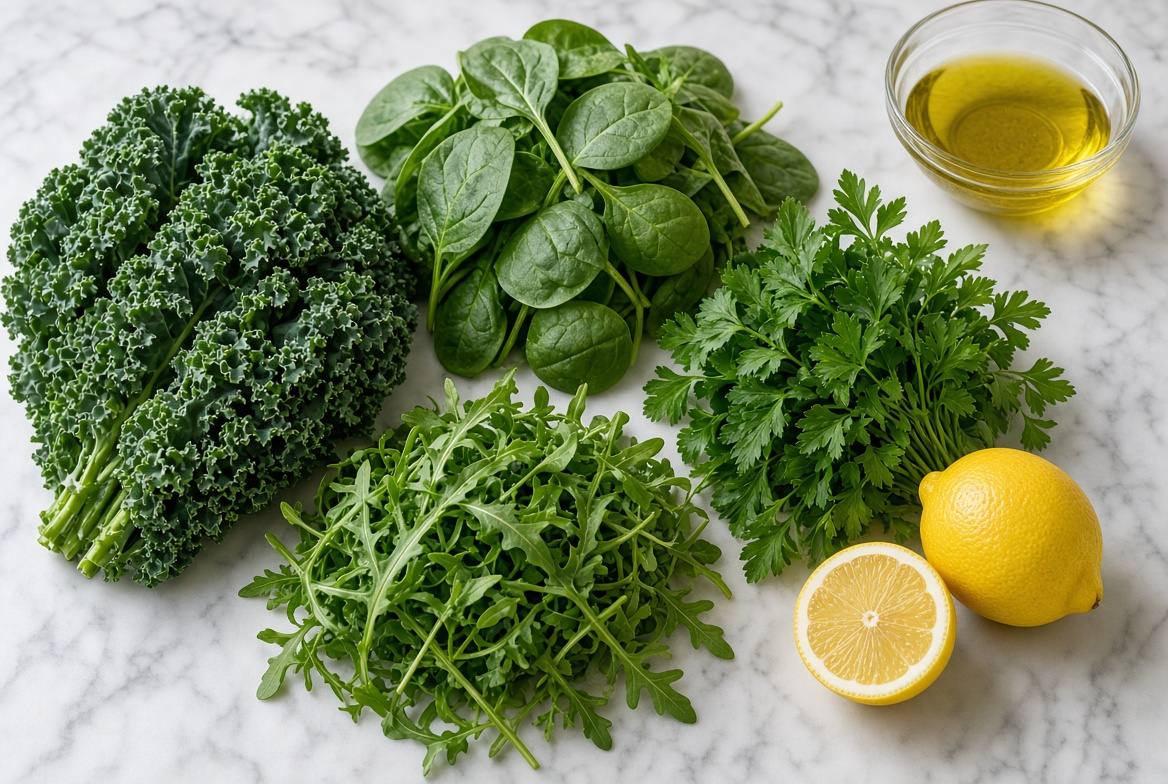
Leafy greens. Kale, spinach, arugula, herbs. They take oil and lemon and become a volume of food that is hard to overeat. Frozen spinach counts. If chewing raw kale is miserable, cook it.
Extra-virgin olive oil. The fat that makes vegetables edible enough to repeat. Use it where you can taste it. You do not need a boutique bottle for every pan; you need a bottle you will actually pour.
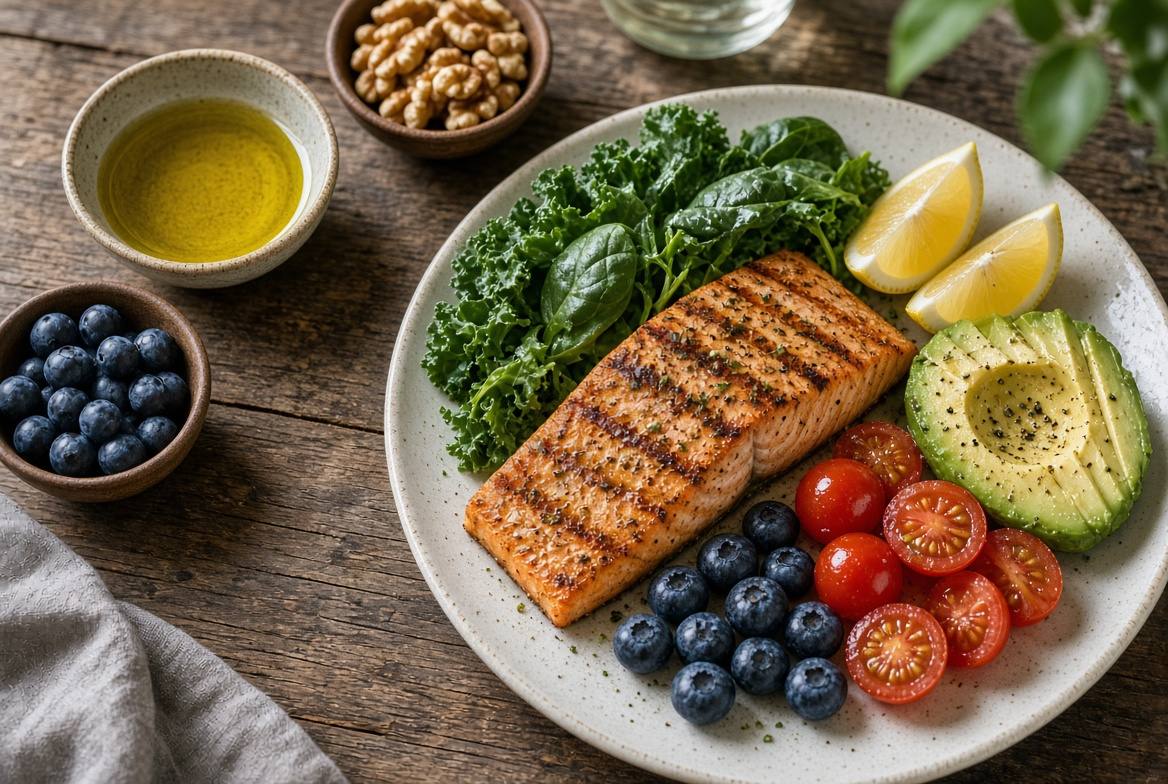
Oily fish. Salmon, sardines, mackerel, a couple of times a week if you eat fish. Tinned fish is a legitimate weeknight protein. If you do not eat fish, beans, tofu, and walnuts carry part of the same idea without pretending they are identical.
Berries and other deep-coloured plants. Fresh or frozen. Not a powder. Tomatoes, red peppers, and purple cabbage belong in the same colour logic.
Walnuts, almonds, seeds. A handful, not a trough. They travel well and stop a gap between lunch and dinner.
Beans and lentils. Fibre that actually shows up at lunch. Rinse tinned beans. Cook a pot on Sunday if that is your style.
Yogurt, herbs, garlic, citrus. Flavour is what makes a pattern last. Bland “health food” is why people return to packets.
What to de-emphasise without writing a ban list
Ultra-processed snack food, sugar-sweetened drinks, and habitual deep-fried takeaway are the usual crowd. You do not need a perfect week. You need most weeks to look more like the basket above than like a car dashboard. Alcohol is not an anti-inflammatory strategy. Neither is a detox tea.
How this list meets the calculators
None of these foods cancel a high BMI on their own. They do make the plates in the meal framework easier to like. If you are tracking energy with a clinician’s blessing, open the calorie calculator for a range and the BMI calculator for a size snapshot. The BMR tool is the resting floor only.
Joint pages belong here too. People looking after knees or a stiff back still need dinners they can assemble after a slow walk, which is why weeknight dinners reuse this basket.
Cooking notes that keep the pattern alive
Roast a tray of vegetables while something else is in the oven. Keep tinned fish, tinned beans, frozen greens, and a bottle of oil in the house so a bad supermarket day does not collapse the week. Eat fruit you like rather than fruit you think scores higher. Repeat breakfast. Most of the health effect of a “Mediterranean” pattern is consistency, not a holiday in Greece.
Salt is a flavour tool. People with blood-pressure advice from a clinician should follow that advice. Everyone else can season food so they will eat the vegetables.
Supplements are not this article
Fish oil, turmeric capsules, and greens powders have their own research debates. This page does not sell them and does not rank them. If you take anticoagulants or have gallbladder disease, herbs and oils in supplement doses are a pharmacist conversation. Food first is the only promise this article will make.
What this list is not
It is not an elimination diet. It is not a treatment for autoimmune disease. It is not a weight-loss guarantee. A salad does not replace prescribed care. Use the list to stock the kitchen, then talk to a clinician about your own conditions.
Is this an elimination diet?
No. It is an add-in list. Remove foods only with a clinician if you have a diagnosed issue.
Can vegetarians use the same list?
Yes. Keep the plants and oil; use beans, tofu, eggs, or yogurt where fish would have been.
Do I need organic produce?
Buy what you will wash and eat. Frozen mixed vegetables are a legitimate staple.
What about red meat?
This pattern leans on fish and plants. An occasional portion of meat can sit in a week without turning the page into a manifesto.
Will this lower my BMI by itself?
Only if overall intake and movement change. The list is quality. Quantity still lives with you and, when needed, with a clinician.
Mediterranean-style patterns are described across public-health and nutrition reviews. This page is a kitchen translation, not a copy of a journal table. Related: framework, disclaimer.
A week of putting the list on plates
Monday: eggs, greens, and toast. Tuesday: the salmon tray from the dinner article. Wednesday: beans and tomatoes. Thursday: yogurt, berries, and leftover vegetables at lunch, fish or tofu at night. Friday: a simple pasta with oil, garlic, and a bag of frozen spinach. Weekend: cook a pot of lentils and roast whatever vegetables were left. That week is ordinary. Ordinary is the goal.
Drinks count. Water and coffee without a dessert poured into them will do. If you like tea, drink tea. Fruit juice is fruit with the chewing removed; treat it as occasional. The list does not require special waters.
When money is tight, drop the boutique items first. Keep oil, beans, eggs, frozen vegetables, oats, and tinned fish. The pattern survives. The brand of berry does not. For plate geometry rather than shopping, return to the framework.
Eating with other people
A list like this fails when it cannot survive a shared table. Cook the vegetables and fish you like and let other people add cheese or bread if they want it. Do not narrate the anti-inflammatory story at dinner. The food can be quiet. Quiet food is easier to repeat than food that comes with a lecture.
If you cook for someone with chewing trouble or low appetite, soften greens in the pan, mash beans, and keep oily fish in small flakes. The list still holds. Texture is part of care in later life, not an afterthought.