
Journal
A simple meal framework you can repeat
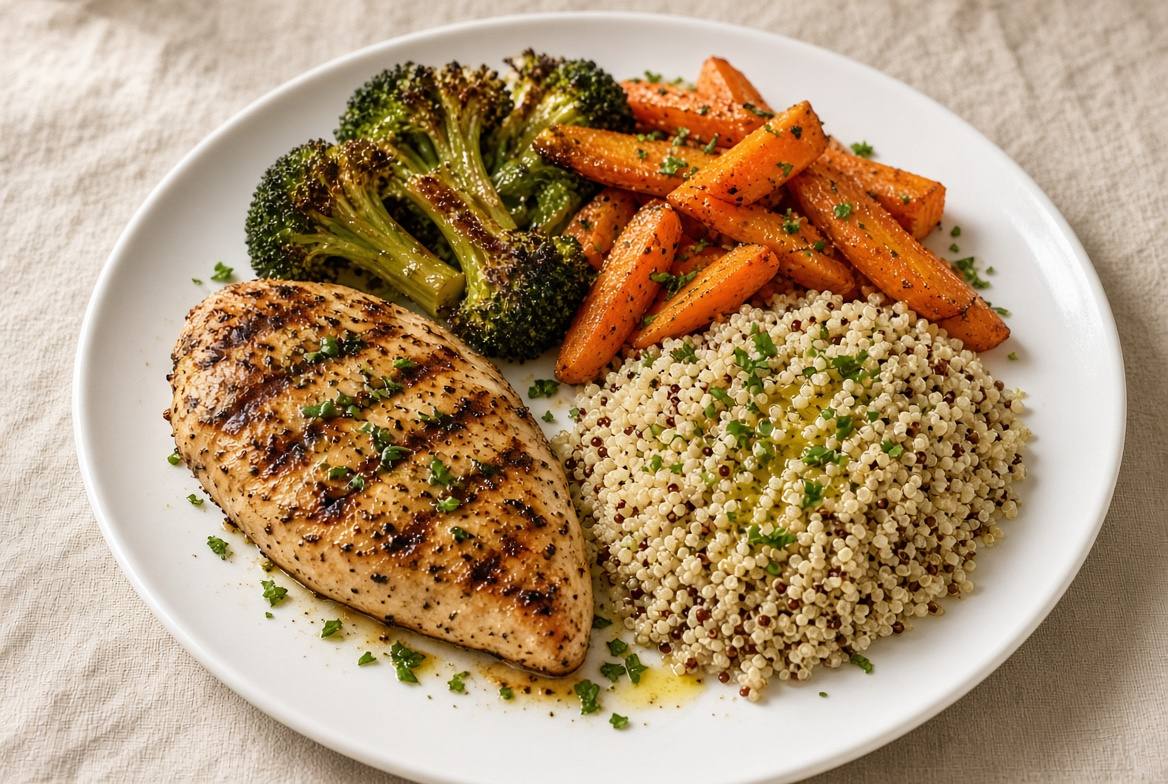
Most printed “weight-loss menus” fail because they are too specific. A framework survives a bad supermarket day, a leftover night, and a guest who does not eat fish. This page is the framework: protein, plants, a starch you digest well, and a fat you can see. Then, if you need a number, you open the calorie calculator. You do not rebuild the plate every time the number twitches.
The framework is for generally healthy adults. It is not a 1,200-calorie script, not a ketogenic protocol, and not medical nutrition therapy for diabetes or kidney disease. If you have those conditions, the plate still has to match the clinician’s rules first.
The plate
- A palm of protein — fish, chicken, beans, eggs, tofu, yogurt, tinned fish
- A fist or two of plants — the leaf and colour list
- A cupped hand of starch you digest well — potatoes, rice, oats, good bread, quinoa
- A fat you can see — olive oil, nuts, avocado, not mystery sauce
Repeat that shape three times a day, plus fruit or yogurt if you get hungry. That is the method. Season it so you will eat it tomorrow.
Breakfast, lunch, dinner without a new personality
Breakfast can be yogurt, fruit, and oats, or eggs and vegetables, or leftover dinner. Lunch can be a bean and green bowl with oil and lemon, or a sandwich built on the same four parts. Dinner can be any of the three templates on weeknight dinners. The point is recognisable structure, not novelty.
People who skip breakfast and then hunt at 16:00 are not failing a moral test. They are running a pattern that makes the evening louder. If a small breakfast steadies you, use one. If it does not, keep protein at the first meal you do eat.
Where the calculators fit
Use the BMI calculator once, not daily. Read its limits. Use BMR only as the floor, on the BMR page. Use the calorie tool if you want a numeric range for the week. Do not eat at BMR to “speed things up.”
If joints limit how you shop and cook, keep the framework and shorten the shopping trip. The knee and back pages exist so movement and meals do not live in separate silos.
Shopping that matches the plate
A working week of food is boring in the best way: eggs, yogurt, tinned beans, tinned fish, frozen vegetables, a bag of oats, rice or potatoes, oil, lemons, onions. Fresh leaves when you will eat them before they melt. Fruit you actually like. That list survives most budgets better than a coloured “superfood” basket.
Eating away from home
Look for the same four parts on a menu. Add vegetables first. Take part of a large starch home. Oil and vinegar beat mystery cream if you have a choice. One restaurant meal does not require a compensatory fast the next morning.
Hunger, fullness, and weeks not days
Protein and plants slow a meal down. Sleep and walking change hunger as much as a spreadsheet does. Judge the framework over two weeks: energy, cooking compliance, and how clothes feel. Daily scale theatre is optional and often unhelpful.
Is this a 1,200-calorie plan?
No. Low fixed-calorie menus belong in clinic, not in a template article.
Can I meal-prep this?
Yes. Roast a tray of vegetables, cook a pot of starch, keep a protein ready. Assemble, do not invent.
What if I do not eat meat or fish?
Beans, lentils, tofu, eggs, and yogurt carry the protein corner. Oil and plants stay.
How does dessert fit?
As an occasional planned item, not as the unnamed fifth corner of every plate.
Can this support weight change?
It can support a modest, clinician-agreed deficit because the plate is filling. It is not a guarantee.
Plate models of this type appear in many national food guides. This version is written to sit next to our calculators. Related: dinners, disclaimer.
When appetite is small
Older adults sometimes arrive at dinner without hunger and then snack at midnight. In that case shrink the plate but keep the four parts. A smaller palm of protein still beats a biscuit. Soup with beans and oil can be a full meal if bread sits on the side. If appetite collapse is new and paired with weight loss you did not choose, that is a clinician visit, not a framework tweak.
When appetite is loud
Build the plants and protein first. Eat sitting down. Put the extra starch away before you serve. This is ordinary advice because it works more often than a new app. If loud appetite arrived with a new medicine, take that fact to the prescriber rather than blaming dinner.
Repeat the framework until it is boring. Boring meals are a feature. Novelty is how snack food sells itself. Related dinners: three trays.
Travel and odd hours
Airports and night shifts wreck printed menus. The framework still works: yogurt and fruit; a supermarket salad plus tinned fish; eggs if you can find them; a sandwich with leftover chicken and a piece of fruit. Drink water. Do not “start again Monday” after one delayed train. Start again at the next meal.
Shift workers should park the largest protein-and-plant plate at the time they are actually hungry, even if that is 02:00. The four parts matter more than the clock. If reflux is an issue, keep the last plate two or three hours before lying down when you can.
For numbers on odd-hour days, the calorie tool is still only an average. Use it as a weekly budget, not as a night-shift stopwatch. Then return to this framework when the roster calms down.
Children at the table, adults on this site
This framework is written for adults. Children need their own portions and their own clinical advice. You can still cook one tray and serve different amounts. Do not put a child on an adult calorie target from our calculator. The tools on this site refuse child BMI for the same reason.
If you live alone, the framework still wants leftovers on purpose. Cook two portions. The second portion is tomorrow’s lunch and the reason you will not hunt for packets at 16:00. That is the entire productivity lecture this page will give.