
Journal
How to measure blood pressure at home
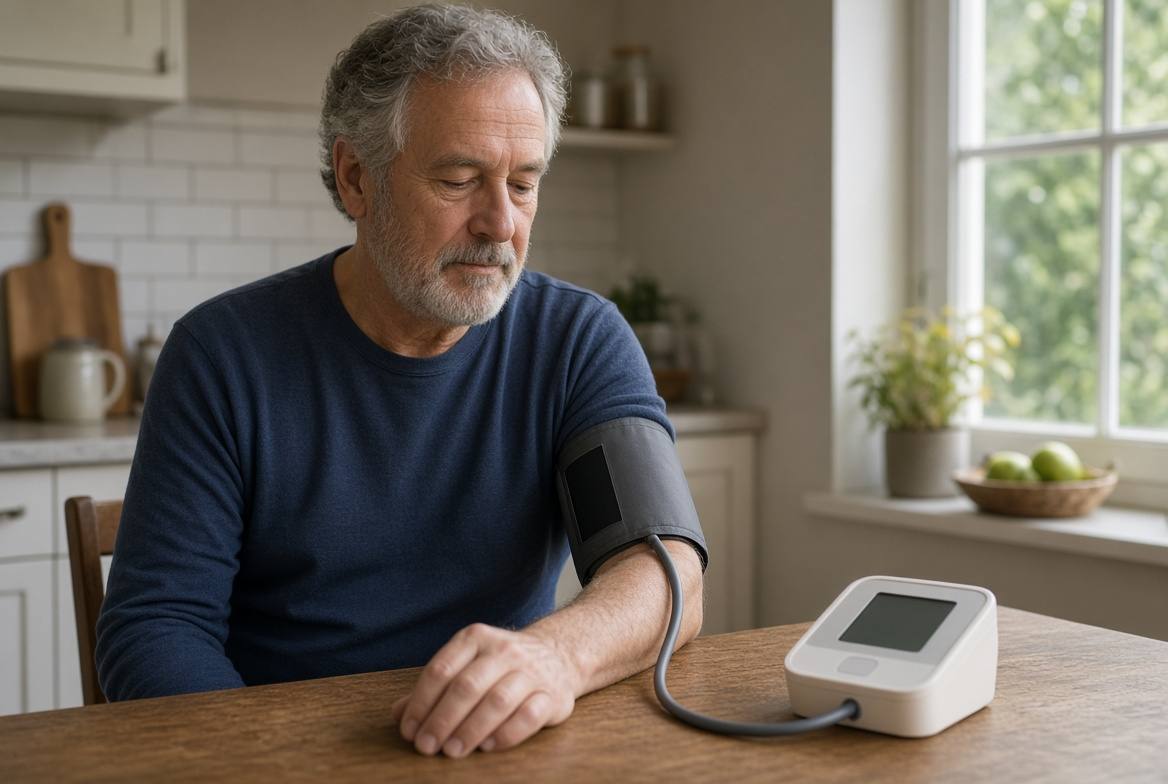
An upper-arm cuff at home is one of the few consumer devices that maps onto adult health indicators instead of onto a marketing score. Wrist gadgets and watch estimates are noisier. The photograph on this page is the method: seated, cuff on the bare upper arm, device on the table, feet on the floor. Copy that picture before you copy anyone’s “biohack.”
Public-health lists treat blood pressure as a core adult measure alongside size, tobacco and movement. That is why it sits next to adult indicators rather than next to a sleep score. It is also why this site will not sell you a cuff. Buy a validated upper-arm device from a list published by a blood-pressure society if you can, and learn the technique once.
Technique that makes a log usable
Sit for five minutes. Back supported. Cuff on skin, not a thick sweater, at heart level. Feet flat, legs uncrossed. No talking, no scrolling. Take two readings a minute apart and write both. Morning and evening for several days beats one heroic session after you ran up the stairs.
Caffeine, a full bladder, talking, a crossed leg and a cuff over a hoodie all move the number. So does a device that has not been validated. If two home devices disagree by a wide margin, the log is not ready for a clinic visit until you know which cuff is telling the truth — often by bringing it to the appointment and comparing.
What the numbers are for
They are for a clinician who can look at your medicines, your kidneys, your heart history and the rest of you. They are not for starting or stopping a tablet because a blog listed a target. They are not for stacking a “detox tea” on top of a high reading; see shortcuts.
Walking and a plate you can repeat still matter. They do not replace a medicine you were prescribed. Use the meal framework as food, not as a substitute cardiology clinic.
How often
A block of days when you are checking a new situation — a medicine change, a high clinic reading, pregnancy is out of scope for this adult site and needs obstetric advice. Then, for many people, occasional checks as advised. Ten readings a day is not diligence. It is noise, and it raises the reading by making you sit in judgement of your own arm.
Write date, time, both numbers, which arm, and whether you had caffeine. That notebook belongs next to waist and walking minutes on daily metrics only if you are in a monitoring block. The rest of the year, shoes and meals may be the better log.
Wrist cuffs, watches and clinic surprise
Wrist cuffs are sensitive to position. Watches that claim blood pressure are not the log this page wants. Clinic readings can sit higher because of hurry and “white coat” tension. That is a known pattern, not proof that home numbers are fake. Bring the home notebook. Let the clinician decide which story to treat.
Some medicines, including some for mood and some for pain, change pressure. So do decongestants. A pharmacist can look at the list. A calculator cannot.
When not to trust the next reading
If the arm is injured, if the cuff does not fit, if you have an arteriovenous fistula, or if a clinician has told you to use a specific arm, follow that instruction. Irregular heartbeat can confuse some automatic devices. That is another reason the notebook goes to a person rather than into an average you invented.
Upper arm or wrist?
Upper arm is the default for a home log.
Why is the clinic higher?
Hurry and white-coat effect are real. So is a sloppy home cuff. Compare methods before you pick a fight with either number.
Can I measure over a shirt?
A very thin shirt is sometimes tolerated. Bare arm is better.
Does BMI change the target?
Targets are clinical. BMI is a different measurement. See the BMI calculator for size, not for pressure.
What if I feel fine with a high reading?
Feeling fine is common. High pressure still belongs in clinic.
Home-monitoring technique follows common hypertension-society teaching: rest, posture, repeats, upper-arm cuff. Official thresholds live with the clinician who sees you.
If you buy one device after reading this page, buy a validated upper-arm cuff and learn the five quiet minutes. Leave the watch for steps.
Fit, batteries and the quiet chair
A cuff that is too small reads high. A cuff that is too large can read low. Measure the mid-upper arm and buy the size the maker lists, not the colour you liked in the box. Replace batteries before the device starts inventing numbers. Sit in the same chair. The ritual is the accuracy.
Household argument mid-reading will raise the figure. So will pain. If the shoulder is angry, use the other arm if you have been told that is safe, or postpone the session. Neck and shoulder tension has its own page; do not invent a blood-pressure crisis out of a desk day unless the numbers and symptoms say so.
Children and pregnancy are outside this adult protocol. Do not put a home cuff on a child because you have one in the drawer. Do not interpret a pregnant adult’s numbers from this article.
Take the device to clinic once so they can compare. That single trip saves months of arguing with a notebook. Then come home and keep the five quiet minutes. That is the entire advanced course.
If two readings differ a lot, sit another minute and take a third. Write all of them. The clinician can average; you should not invent a favourite.
Loan the cuff only with the technique attached. A neighbour who measures standing in a hallway is not using your device. They are using a different method that will not match yours.