
Journal
Adult health indicators in plain language
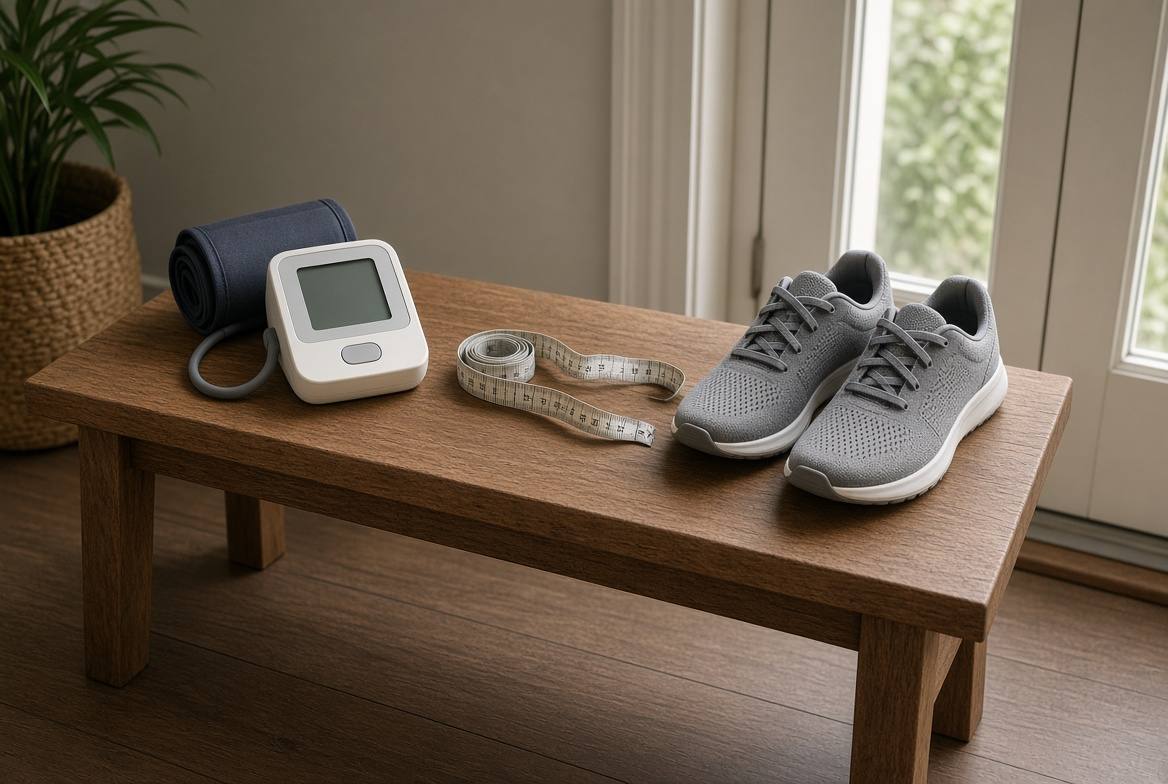
Adult health, in public-health language, keeps being measured with a short list: body size, where fat sits, blood pressure, glucose when it is indicated, tobacco, and whether you move. The still life on this page is that list in objects — a cuff, a tape, shoes by the door. Official pages live on who.int. We do not host them. We translate the list into what you can do at home without pretending a static site is a ministry of health.
Size and shape
BMI adult bands are the ones on the BMI calculator. Read what BMI is and where it fails before you treat a category as a verdict. Waist-to-height is the ratio tool. Measure waist as on daily metrics. The two numbers together beat either one alone.
Some regional guidelines use lower BMI cut-offs for people of Asian ancestry because metabolic risk can appear earlier. This site does not silently change the cut-off. Ask the clinician which chart they use.
Blood pressure
Home technique is the whole of the cuff page. High readings more than once belong with a clinician, not with a tea. Medicines, when prescribed, are not optional hobbies.
Movement and tobacco
Some walking most days. Strength enough to stand from a chair — trained on the knee and balance pages. Not smoking remains one of the largest levers available and needs no calculator.
What this list usually does not include
Detoxes, wrap challenges, daily bathroom-scale fat percentages, and zone-2 religion. Those live on shortcuts and wearables as warnings. Glucose and cholesterol need blood tests. A website cannot see them.
How to use the list without becoming a project
Pick the measure that matches why you opened the tab. Frightening BMI: read the two BMI articles and take waist. Family history of pressure: learn the cuff. After a fall: balance and a clinician, not a new watch. Hungry and tired: food pages, not a new indicator.
Repeat the useful measure the same way. Do not add a sixth app. The shoes in the photograph are doing more work than a leaderboard.
Is this official WHO advice?
No. Official material is on who.int. We summarise themes in kitchen language.
Do I need every test at home?
No. Cuff, tape, shoes cover the home set.
Where does sleep fit?
On the wearables page. Sleep is health. Gadgets are optional.
What about cholesterol?
A blood test. Not a website.
Can walking replace BP medicine?
Walking helps. Prescribed medicine is not a hobby you pause.
WHO and many national agencies publish adult risk-factor lists covering overweight, blood pressure, tobacco and physical inactivity. This page is a household translation.
If you only take one object off the bench, take the shoes. Then learn the cuff if pressure is the family story. Leave the rest of the internet where it is.
Children use different charts. Pregnancy changes the meaning of weight and pressure. Neither group should be run through these adult tools.
Bring a one-page notebook to appointments: waist, a few cuff readings, minutes walked, medicines. That page outperforms a folder of screenshots from five apps.
When headlines invent a new marker of the year, check whether it changes dinner or walking. If it does not, it can wait.
The legal pages on this site exist so we can stay educational. They are not a substitute for the person who can examine you.
Glucose, when it belongs
This site does not run a glucose calculator. Fasting glucose and HbA1c are laboratory tests. Thirst, unexplained weight change and family history belong in clinic, not in a fruit-only week. Food quality still helps the whole picture — see the foods list — but it does not replace a lab form.
Alcohol and the quiet version of “Mediterranean”
Some public-health pages mention alcohol as a risk. A coastal photograph that includes wine is not a prescription to drink. The quiet week on this site treats wine as optional and often absent.
What “enough movement” looks like without a lab
Minutes you can talk through. Stairs you can still do. A chair you can leave without using your hands as a crane every time. Those are crude and useful. They sit closer to later-life independence than a personal record on a closed ring.
Balance practice is part of the movement story after sixty. So is the hip hinge you use to close a car boot. The indicator list does not name those drills. The mobility articles do, because that is how the list becomes a Tuesday.
If you already meet with a clinician who uses different targets — different blood-pressure goals after a stroke, different BMI conversation after a transplant — their targets win. Delete this tab for that decision.
Salt, air and the rest of the WHO-shaped list
Sodium advice is individual when you already have pressure or kidney disease. Everyone else can still cook from herbs and lemon so food tastes like food. Outdoor air and indoor smoke are public-health topics a website cannot clean. What you can do is not add smoke on purpose.
Mental health sits next to these numbers even when a tape cannot see it. A notebook that becomes a courtroom is a reason to close the notebook and talk to a person. Indicators exist to support a life, not to replace one.
Bring questions, not printouts of our articles, to the appointment. Ask which chart they use for BMI, which pressure target they want at home, and whether walking is restricted after a procedure. Write their answers in the same book as the centimetres.
That is as close as a 1,000-word household page can get to a ministry list without lying about what it is.
Use official sites when you need the primary document. Use this page when you need to know which drawer to open at home.
Open the matching calculator only after you know which question you walked in with.