
Journal
Heart rate, sleep, and wearables
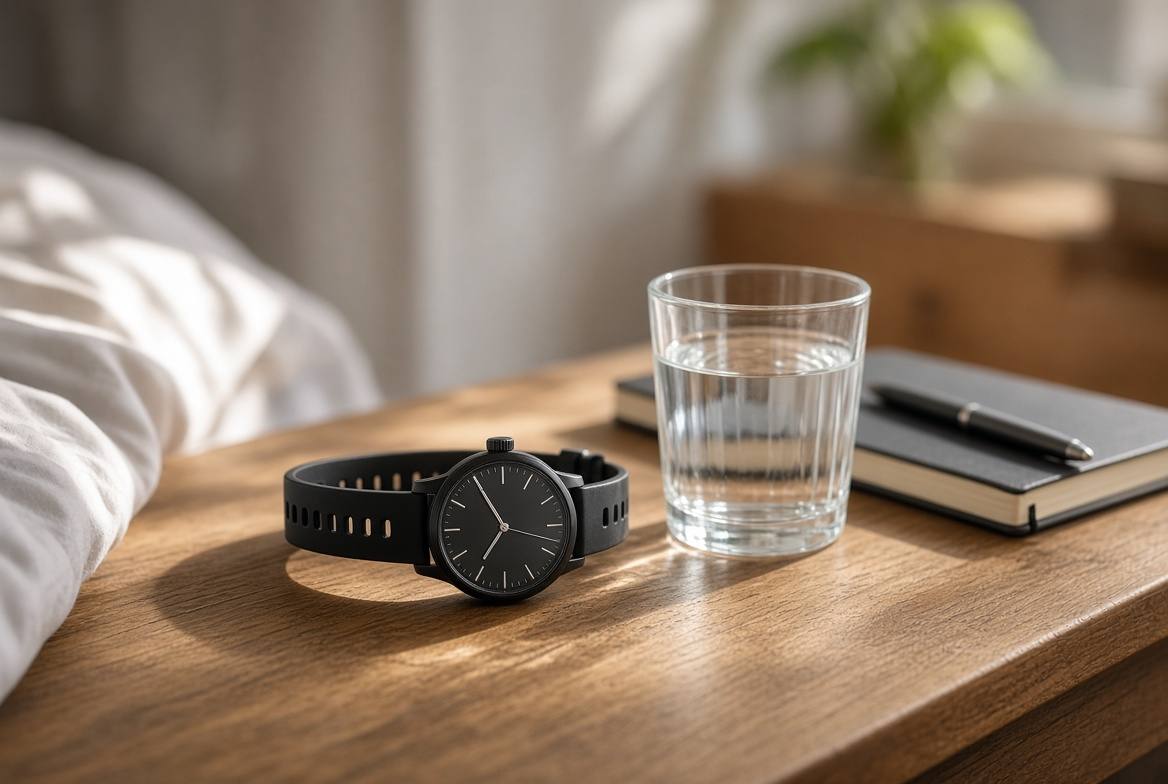
Wearables are good at nagging you to walk and mediocre at diagnosing you. Resting heart-rate trends can be useful when you measure them the same way for weeks. Sleep “scores” are often a blend of movement, pulse, and a company that wants you to open the app tomorrow. The photograph is a watch on a nightstand next to water and a notebook — the right scale of gadget for most adults on this site.
The heart-rate zone calculator uses 220 minus age so you can see what a watch is approximating. That formula is from a classroom era. Real maximum heart rate varies widely. Zones piled on a shaky maximum are also shaky. Use them to understand a badge, not to punish a Tuesday walk.
Heart rate the useful way
Optical sensors on the wrist wobble with cold skin, a loose strap, and pumping arms. Chest straps are usually steadier if you actually train by heart rate. Most readers of this page do not. They walk, they do sit-to-stand, they want to know whether a watch screaming “peak” on a flight of stairs means anything. It usually means stairs.
Beta blockers and some other heart medicines flatten heart-rate response. Chasing a zone while you take those medicines is how people get odd advice from an app that does not know the prescription list. Resting rate that jumps and stays jumped, with illness or without explanation, is a clinician question — not a new strap.
Sleep scores versus sleep
Time in bed, caffeine after mid-afternoon, a bright screen, pain at night, and a room that is too hot explain more nights than a stage chart. If a joint wakes you, the useful pages are knees, back or hips, plus a clinician if pain is new or severe. Buying a ring will not splint a knee.
Snoring plus daytime sleepiness is a sleep-apnoea conversation, not a premium subscription. Watches that hint at “breathing disturbances” are hints. They are not a sleep study.
What to write down instead
Bedtime and wake time. Whether you could walk the next day. Blood pressure from a cuff, on the cuff page, when you are in a monitoring block. Waist and minutes on daily metrics. The notebook in the photograph beats another year of badges.
Calories and macros still come from the calorie calculator and the meal framework, not from a watch that estimates burn with a flourish. Those burn estimates are often optimistic. Do not eat them.
When a gadget helps
It helps if it gets you out the door. It helps if a resting-rate trend, taken seriously, sends you to a clinician with a printout rather than with a vibe. It helps as a timer for a ten-minute walk. It does not help if every session becomes a score and every night becomes a verdict.
People recovering from illness, people on rate-limiting drugs, and people with known arrhythmias should treat zone training as a clinical hobby, not a website plan. The calculator on this site says the same thing on its own page.
Is a low watch heart rate always fitness?
Not if you are on a blocker, unwell, or the strap is misreading.
Should I buy a chest strap?
Only if you train by heart rate and enjoy the hobby.
Can a watch replace a blood-pressure cuff?
No. Use an upper-arm cuff for the log.
Do sleep scores diagnose apnea?
No.
Which device first?
Cuff, tape, shoes. Then a watch if you still want one.
220 − age is a widely repeated estimate of maximum heart rate with large individual error. Optical wrist sensing has known motion artefact. Treat both as context.
If the watch is making the walk smaller, take it off for a week and walk anyway. The pavement does not need a score.
Share a walk with someone if that is how you leave the house. Do not share a leaderboard that turns a family member into a competitor you resent by Thursday.
When the battery dies, notice whether the habit dies with it. If it does, the gadget was the habit. Move the habit back to shoes by the door.
Workdays, rest days and the urge to close rings
Rings and move-circles train you to fidget at 23:40 to satisfy a graphic. That is not health. It is a game. If your knee is already complaining, the extra midnight kitchen laps are how you arrive at the knee page with a swollen joint and a badge.
Rest days are allowed. Illness days are allowed. A watch that shames rest is badly aligned with later life, where tissue needs sleep more than it needs a personal record. Sleep that actually happens beats a score that says you almost achieved a perfect night.
Give the watch a job: count minutes walked, or wake you once. Do not give it a job as a conscience. Conscience belongs with meals you can repeat and with a clinician who has met you.
When friends compare closing rings at dinner, you can change the subject to the food. The framework travels better than a leaderboard.
Put the charger in a drawer if the last thing you see at night is a deficit of points. Darkness is part of sleep hygiene. Points are not.
Light, temperature and caffeine still outperform firmware. A cool dark room and a last coffee that is not at 20:00 will change more nights than a new algorithm. If pain, snoring or mood is the actual story, take that story to clinic rather than to a shop.
Firmware updates will not examine your medicines. Keep a paper list of tablets next to the notebook. That list explains a resting rate better than a graph coloured green.
If you take the watch off and the week gets quieter, believe the quieter week.
Quiet weeks are data too. You do not need a coloured ring to prove you walked to the shop.