
Journal
Daily metrics that are worth writing down
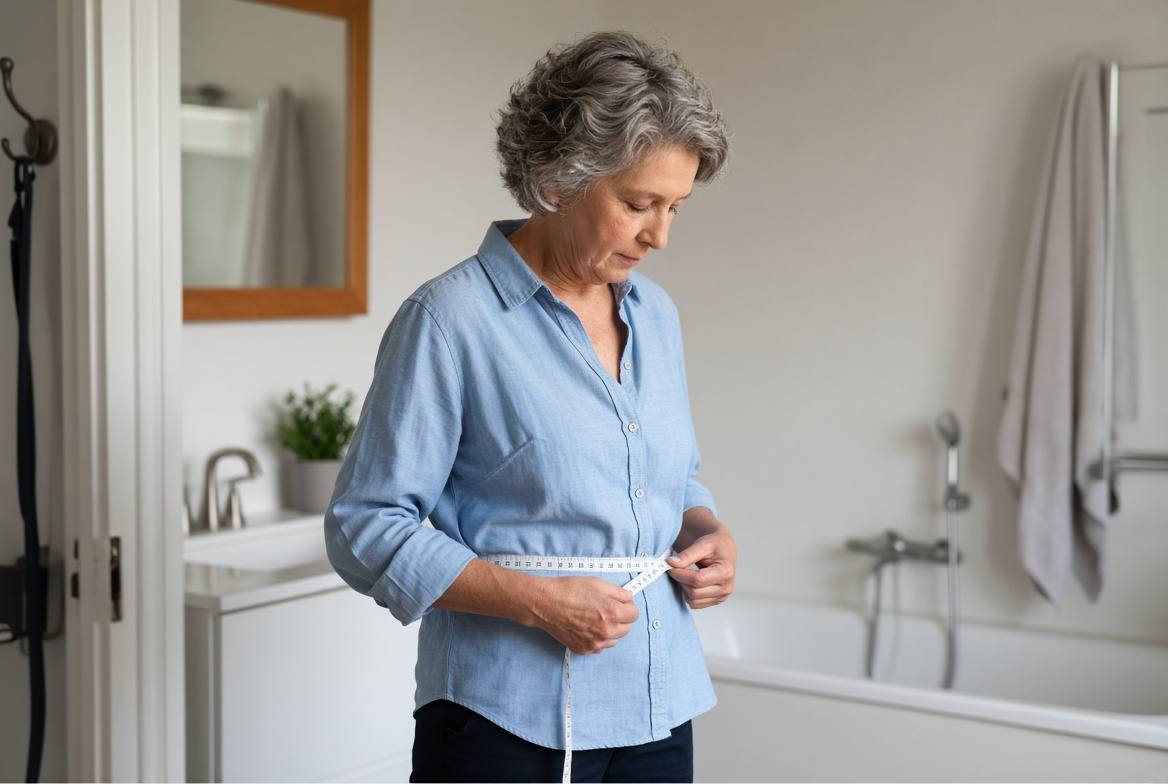
You can drown in dashboards. Three numbers are enough for most adults who use this site: waist in centimetres, walking minutes, and weight only often enough to see a trend. Daily BMI is theatre. The BMI calculator is for snapshots. The waist-to-height calculator is for the tape already in the photograph — used the same way each time, after a quiet breath, halfway between the lowest rib and the top of the hip.
The woman in the picture is doing the unglamorous version of “tracking.” No ring, no leaderboard. A cloth tape and a bathroom with decent light. That is the tone of this page.
Waist, measured so the number means something
Stand. Relax the abdomen. Tape level. Write centimetres, not a belt hole from a different season. Morning, before a large meal, is easier to repeat than “sometime after work.” Do not suck in. Do not measure over a coat.
A one-centimetre wobble is noise. A few centimetres in the same direction across a month is a signal. Pair the tape with the ratio tool if you want the height context, and with BMI limitations if the index and the tape disagree. They often will. Central fat is the story BMI cannot see.
Walking minutes beat step theatre
A watch can count steps. A kitchen timer can count minutes. Minutes you actually walked on level ground are the unit this site cares about, because they survive a week when joints are noisy. If the knee or the back limits the route, shorten the route — do not delete the habit. Use knee mobility or the back page rather than waiting for a painless month that may not arrive.
Hills and uneven paths are progress only after flat minutes feel ordinary. Limping more at the end than at the start means the dose was too high, not that you need a harder challenge.
Weight, used sparingly
Same scale, same time of day, same clothes or none, weekly or not at all. Water, salt, hormones and a late dinner move the kilogram figure without moving fat. People who weigh every morning often react to noise and then open a crash — which is how crash diets start in a notebook that was supposed to be calming.
If a clinician has asked for daily weights after a medication change or a fluid problem, follow that instruction. This page is for adults who were weighing because a website made it look like discipline.
What not to log every day
Body-fat percentages from a bathroom scale. Sleep scores. Heart-rate zones from 220 minus age. Those belong, if they belong at all, on the wearables page and the zone calculator, with the warnings left on. Blood pressure is different: it has a method, and it lives on home blood pressure. It does not need to be measured ten times a day.
A notebook that stays small
Three columns: date, waist, minutes walked. A fourth column for weight if you use it. A fifth for a cuff reading if you are in a monitoring block. That is enough to take to an appointment. Apps that want a social graph are selling a different product.
Food still comes from the meal framework, not from a log that shames last night’s bread. If the notebook starts to run the day, close it for a week and keep walking.
When the numbers disagree
Waist down, weight up: often muscle, food volume, or a different scale. Weight down, waist unchanged, walking collapsed: look at extreme cuts before you celebrate. Minutes up, mood down, scale noisy: believe the minutes and the meals you can repeat.
Should I weigh every morning?
Only if it does not run your mood and someone who cares for you asked for a trend.
Where exactly is “waist”?
Midway between the lowest rib and the top of the hip bone is a common research landmark. Pick one landmark and keep it.
Do steps and minutes both matter?
Minutes of actual walking are enough. Steps help if they get you out the door.
Can I skip all logs?
Yes. Cook and walk anyway.
How does this sit next to BMI?
BMI is a snapshot. These three columns are the week.
Waist measurement landmarks and waist-to-height conversation thresholds are discussed in public-health anthropometry notes. This page is a home method, not a clinic protocol.
If you only keep one habit from this article, keep the tape at the same hour and a walk on most days. Close the other apps.
Clothes, weather and honest weeks
A winter coat hides a waist you have not measured since September. Measure anyway. Rain cuts walking minutes; write the true number rather than inventing a treadmill you did not use. The notebook is not a performance. It is a memory aid for a future appointment and for yourself in six weeks, when you will not remember how the month actually felt.
Travel weeks will look messy. Keep the tape in a wash bag. Walk airport halls if that is what exists. Do not “start again Monday” after a single hotel breakfast. The next meal and the next short walk are the reset. Calculators stay closed until you are home and the routine is recognisable again.
People who live with other adults sometimes hide the notebook. You do not owe anyone a live broadcast of centimetres. You do owe yourself a method that does not turn the bathroom into a courtroom. If another person comments on the tape, take the tape to a time when the house is quiet.
Joint flares belong in the same notebook as a one-line note — “knee swollen, ten-minute flat walk only.” That line will explain a dip in minutes better than any wearable score. Then use the mobility pages rather than deleting movement for a fortnight.
Write the centimetres in pencil. Ink makes a wobble look like a verdict.