
Journal
Protein at each meal
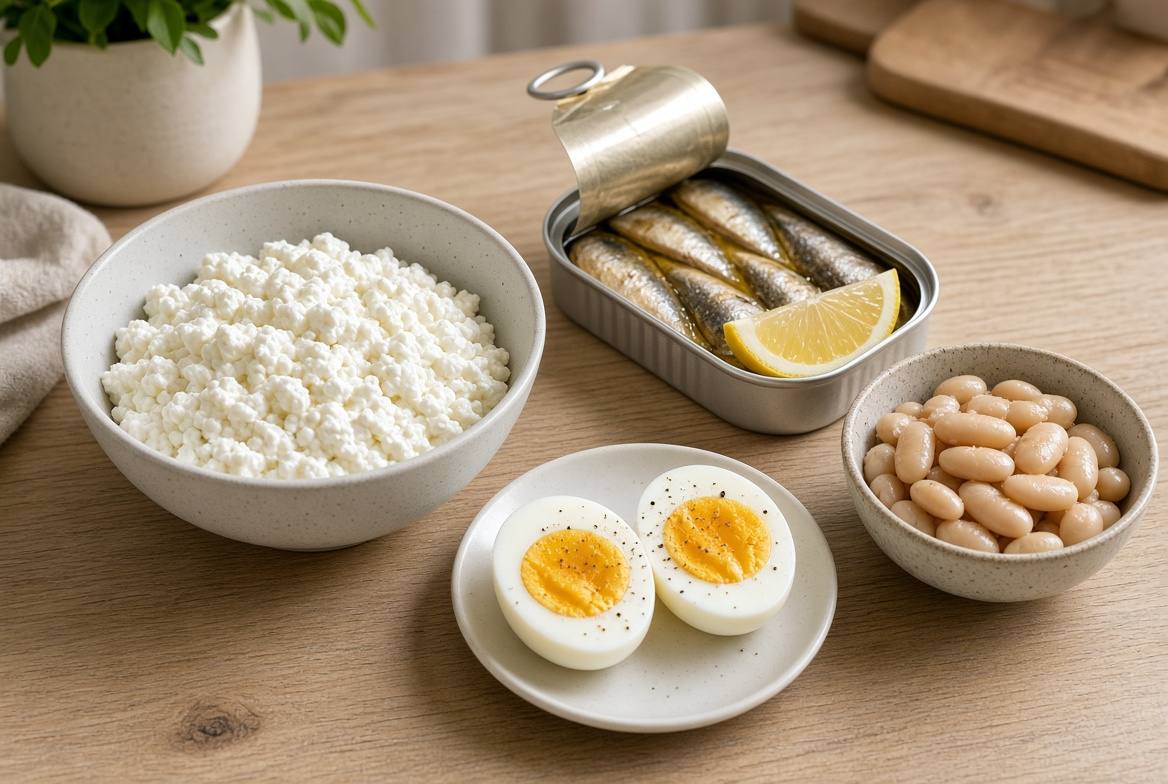
Most adults do not need a tub of powder on the counter. They need something with protein at breakfast, again at lunch, and again at dinner. That pattern keeps sit-to-stand practice from turning into a one-week hobby, and it keeps 16:00 from becoming a hunt through packets. The photograph on this page is the idea in objects: eggs, beans, yogurt-style cheese, tinned fish.
Two calculators on this site will give you a gram number. The protein calculator multiplies body weight by 1.2 and 1.6 grams per kilogram. The macro calculator takes a quarter of an estimated calorie need and converts that into grams. When those two figures disagree, use grams per kilogram and the food you will actually chew. A 25 percent split on a large calorie estimate can look heroic and still be more than you want to cook.
What a palm looks like in a real kitchen
A palm of cooked fish, chicken or tofu. Two eggs. A generous cup of yogurt or cottage cheese. A drained tin of beans or lentils plus a smaller palm of cheese or eggs if you eat only plants at that meal. Tinned sardines with lemon. Leftover dinner from the weeknight trays. None of those require a blender.
Older adults often arrive at breakfast without appetite and then snack at night. In that case move the first palm to whenever hunger actually appears, and keep it small enough to finish. A half-eaten mountain of chicken is not a protein strategy. Three finished smaller servings usually are.
Why spreading it across the day matters
Muscle protein synthesis is not a once-a-day event you can save for a midnight shake. Research on meal distribution is not a reason to become obsessive, but it is a reason not to park the entire day’s grams in one sitting. Breakfast and lunch are the meals people skip. Those are also the meals that decide whether the afternoon is quiet.
If you also use the calorie calculator, remember that protein is part of that total, not an extra layer on top. Raising protein while leaving every other habit identical only works if something else on the plate gets smaller or if you were under-eating protein and still hungry. It is not a free pass.
Breakfast, lunch and dinner without a new personality
Breakfast can be the patterns on breakfasts you can repeat — eggs and greens, yogurt and fruit, leftover dinner. Lunch can be tinned fish on leaves with oil, or beans warmed with tomato. Dinner can stay on the meal framework: a palm of protein, plants, a starch you digest well, a fat you can see.
Shop from the budget list so the palm does not depend on a butcher visit. Frozen fish fillets, eggs, yogurt and tinned beans are how this survives a bad week. The anti-inflammatory list is the rest of the plate, not a competing religion.
Powder, bars and “high-protein” labels
Powder is a tool when chewing is hard, when you are travelling, or when a clinician has asked for a high intake you cannot hit with food. It is not breakfast. Bars that lead with protein often lead with sugar second. Read the packet the way you would read any other ultra-processed snack. If the bar replaces a meal that would have had plants, you lost the better half of the plate.
People with chronic kidney disease, certain liver conditions, or a clinician-set protein cap should ignore gram targets printed by a website. Their number is the clinical one.
Protein next to joints and walking
Sit-to-stand on the knee page and hinges on the hip page ask the thigh and the hip to work. Those sessions need food in the same week. A crash that deletes dinner while you “start physio at home” is how people feel weaker and blame the exercises. Read extreme calorie cuts before you pair rehab with a 1,200-calorie printout.
A workable week
Write a default palm for each meal slot. Repeat it. Change the vegetable, not the structure. If a day goes sideways, make the next meal the palm plus plants — not a compensatory fast. Use the BMI calculator only as context; it does not tell you how much protein to eat. Waist and walking minutes on daily metrics will describe the week more honestly than a daily weigh-in.
Do I need powder if I eat eggs and fish?
Usually no. Count the food first. Add powder only if the day’s food clearly misses the range you and a clinician agreed on.
Can beans cover a vegetarian day?
They can, especially with yogurt, eggs, tofu or cheese in the other slots. Combine rather than hunting a single perfect plant steak.
Is more than 1.6 g per kilogram better?
Not automatically. Higher intakes show up in some training studies. They also mean more food to cook. Kidney issues change the answer entirely.
What about late-night training?
Eat a palm in the meal after the session rather than waiting until morning if mornings are already unreliable.
Does a high-protein diet melt fat by itself?
No. It can make a modest energy change easier to keep because meals satisfy. The energy change still has to exist, and it should not look like a crash.
Planning ranges of about 1.2–1.6 g/kg for generally healthy adults appear across sports-nutrition and ageing-muscle reviews. This page translates them into kitchen language. It is not a renal diet sheet.
If you cook for one, batch a protein once: a tin of beans split across two lunches, a four-egg box used over two breakfasts, a frozen fillet thawed the night before. Isolation is how packets win. Leftovers are how this page stays true on a Wednesday.
Keep lemon, pepper and a bottle of oil next to the tins so the palm does not taste like a chore. Flavour is what makes a pattern last longer than a week of willpower.