
Journal
A grocery list that still looks like food
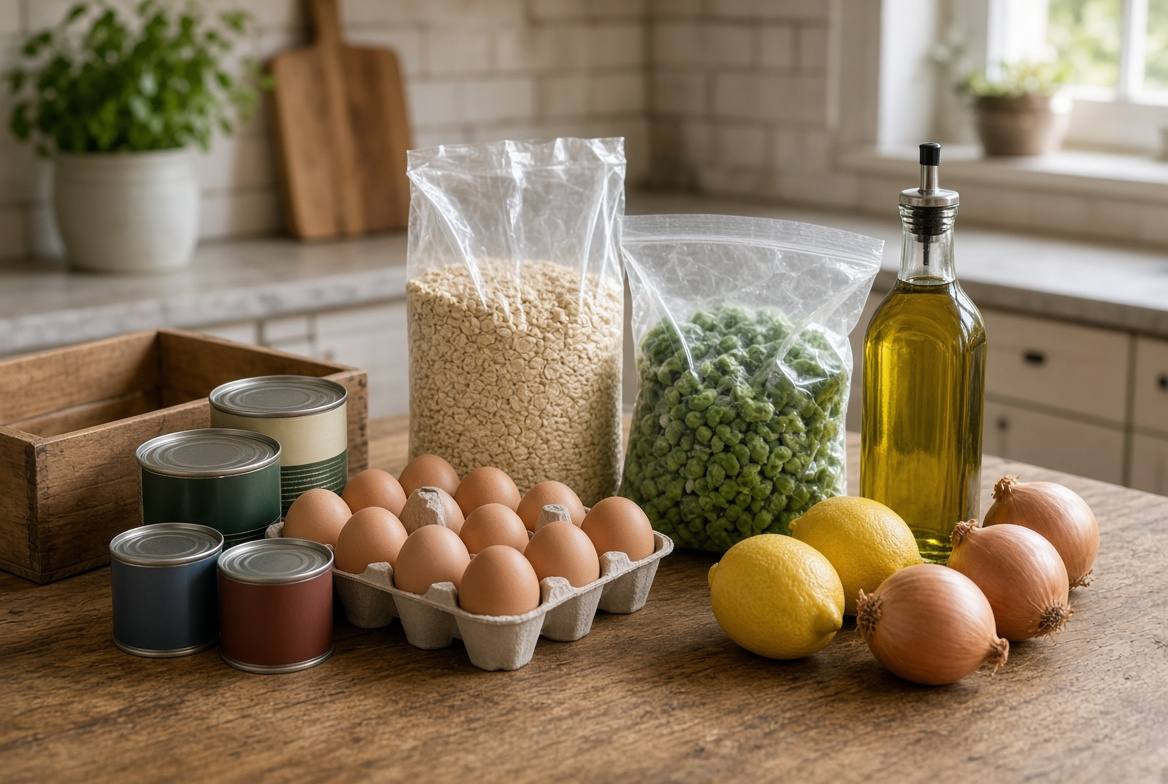
A useful grocery list looks like food you will cook, not like a coloured magazine. The photograph is the spine: eggs, tins, oats, frozen peas, oil, lemons, onions. That pile feeds more evenings than a basket of “superfoods” that wilt on Thursday. Pair it with the meal framework so the bag has a job when it reaches the kitchen.
The spine of the bag
Eggs. Plain yogurt if you eat dairy. Tinned beans and tinned fish. A bag of oats. Rice or potatoes. Frozen vegetables. Onions, lemons, a bottle of olive oil. Fruit you will finish. Fresh leaves only in the quantity that survives the week. That list is also how repeatable breakfasts and protein palms stay possible when money is tight.
Store-brand tins are the same plant. Frozen peas are the same plant. Bread that is on special and still looks like bread is allowed. The anti-inflammatory page is a cooking list, not a luxury aisle; use those foods in cheap form.
What not to let the list become
Twelve sauces. Four kinds of milk. A juice cleanse kit. Protein bars as the default dinner. Those items empty a wallet and still leave you hungry. If a bar is a planned snack for a long shift, buy one pack, not a lifestyle.
A crash shopping trip — cucumber, tea, and a wrap — is how crash weeks start in the aisle. Buy the oats. Leave the kit. Liquid weeks live on the shortcuts page.
A week of plates from one bag
Eggs and vegetables. Bean and oat bowls. Tinned fish on toast with oil and lemon. A tray of frozen vegetables with potatoes and a tin of chickpeas. Yogurt and fruit. That is five dinners and the breakfasts without a second personality. Use weeknight dinners if you want a tray template. Use the calorie calculator only if you want a range, not if you want to shrink the bag into broth.
Leftovers are part of the budget. Cook once, eat twice. A pot of lentils is lunch tomorrow. That is also the fibre plan on the fibre page and the quiet pattern on the Mediterranean week.
Shopping with sore joints
A long supermarket walk can be the day’s activity or the day’s injury. Use a trolley. Shop the same three aisles. Ask for help with a heavy pack of potatoes. Then do the short mobility work at home rather than adding a heroic gym idea the same afternoon — knees, hips, back.
Money, pride, and “eating well”
Eating well on this site means food you can repeat. It does not mean imported berries in February. If the budget only allows tinned fruit some weeks, that still counts as fruit. If fish is expensive, beans and eggs carry the protein corner until the tin is on special. Ideal-weight and BMI tools do not set a grocery bill; they are snapshots. See the BMI calculator and its limits when size anxiety starts rewriting the list into a crash.
A list written at home beats a list invented in the aisle. The aisle is designed to add things you did not plan to cook.
A sample bag for two adults, five evenings
One dozen eggs. Two tins of beans, two tins of fish. One bag of oats. One bag of frozen mixed vegetables. One bag of potatoes or a sack of rice. One bottle of oil. Two onions, two lemons. Yogurt if you eat it. Fruit that will be finished. Bread if you will finish it. That bag is not elegant. It is how weeknight dinners happen without a second shop.
Seasoning can be salt, pepper, a cheap paprika, and the lemon. You do not need a spice library to make the framework edible. If a sauce is the only way vegetables leave the plate in your house, buy one and stop apologising.
When the shop is a long bus ride
Buy more tins and more frozen. Fresh leaves lose. Shop less often. A second smaller shop for fruit is allowed. The long trip can be the week’s longer walk; it should not be a reason to skip food until Friday. If carrying is the problem, smaller bags and a second trip beat a heroic haul that flares a shoulder or a back — see neck and shoulders and the back page.
Specials, bulk and the trap of a giant sack
A giant sack of rice is a bargain only if you will cook it. A warehouse pack of yogurt is a bargain only if you have cold space and a household that eats it. Bulk is not a virtue. Matching the pack to the week is a virtue. Store-brand specials on tins are the better bulk: they keep, they stack, they do not demand a new recipe.
If a “health” aisle item costs three times a tin of beans and promises a shortcut, it is probably the shortcuts page in packaging. Walk past it.
Is frozen as “good” as fresh?
For most vegetables used in trays and pots, yes. Frozen is often picked ripe and then stopped. Use it.
How many days should I shop for?
Five to seven if storage is easy. Fewer if leaves die in your kitchen. Tins cover the gap.
Do I need protein powder to hit a target?
Not as a default. Eggs, yogurt, tins and beans are the budget version. Powder is a convenience product.
What if I live alone and waste food?
Buy smaller packs. Freeze half the bread. Cook a pot and portion it. Waste is a planning problem, not a moral one.
Can this list support a modest deficit?
Yes, because the food is filling. Use a small calorie gap, not a smaller and smaller bag.
Household food-guidance lists in many countries emphasise eggs, pulses, frozen vegetables and oil as core items. Prices are local. This page is a pattern.
Write the spine on paper before you walk in.