
Journal
High-fiber foods you can cook this week
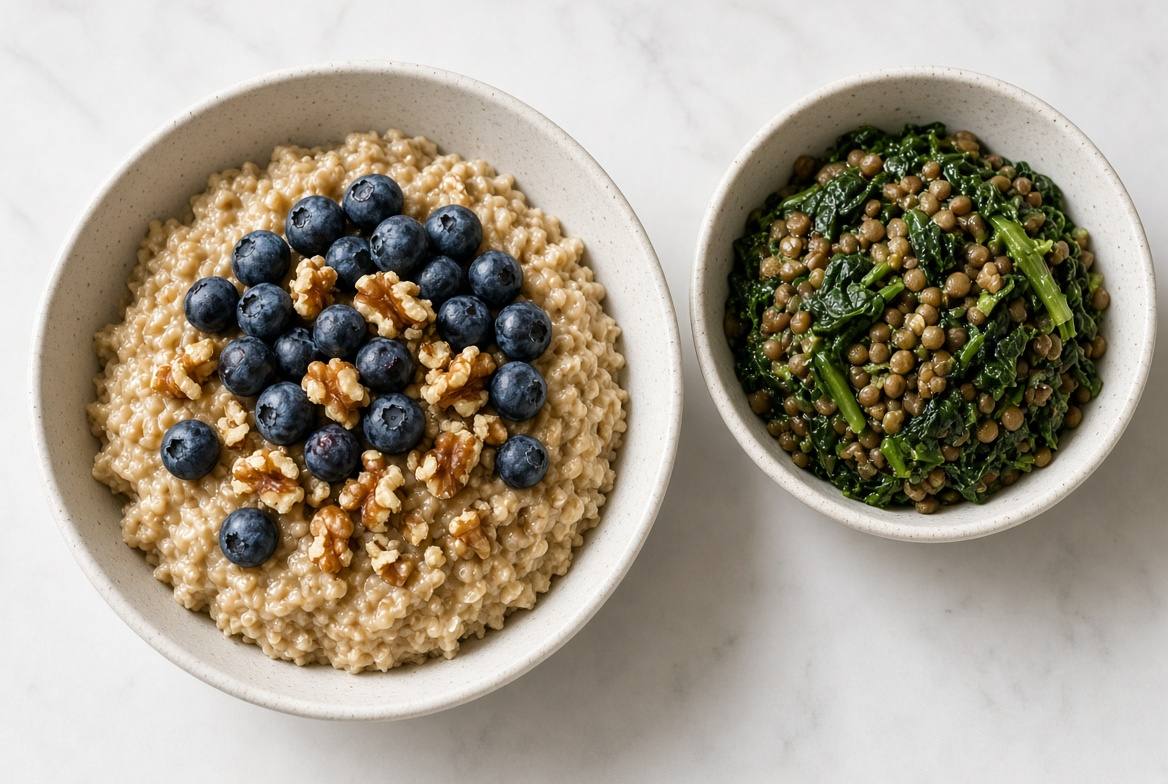
Fibre is the unfashionable reason a plate keeps you full enough to ignore a 16:00 packet. Oats, beans, lentils, greens, berries, pears, and bread that still looks like grain cover most weeks. Public-health targets for adults often sit around 25–30 grams a day. Most people miss that number without being “bad at food.” They simply do not put a bean or an oat on the table often enough.
The photograph is the short list in bowls: oats with fruit and nuts, lentils with greens. That is dinner-adjacent breakfast and a side that can become a meal. Drink water as you add plants; the water calculator is a planning range, not a dare.
A working list, not a superfood tour
Oats at breakfast. Beans or lentils at one meal. Greens most days. Fruit you actually like. Tinned beans count. Frozen spinach counts. Leftover chickpeas on toast count. The anti-inflammatory basket and this list overlap on purpose. Olive oil still belongs on the greens; fibre is not a reason to eat leaves dry.
Whole fruit beats juice for fullness. See shortcuts if a bottle is pretending to be the plant course. Bread can stay if it sits well — crash plans that delete bread and fruit delete fibre first, which is one reason those weeks unravel.
Add it over two weeks
If your current day is white rice and chicken, do not add a three-bean chilli, a bran loaf, and a pear the same afternoon. Add one extra plant portion for a few days. Then another. Walk after the bean meal if that helps comfort. Do not stack a new chilli on the same night you doubled hinge practice on the hip page.
Gas in week one is common and usually settles. Pain, blood, or a change in bowel habit that is new and persists is a clinician question, not a reason to buy a different powder.
Fibre and weight talk
Fibre does not melt fat. It makes the meal framework easier because plants and beans take up space and slow a meal down. That can support a modest energy change from the calorie calculator. It cannot rescue an extreme cut.
Pair fibre with protein so the meal is not only plants. The protein calculator and protein page sit next to this one for that reason. Oats plus yogurt is a better breakfast than oats alone; see repeatable breakfasts.
Shopping that keeps the list alive
A bag of oats. Two tins of beans. A bag of frozen mixed vegetables. Fruit that will be eaten before it collapses. That is also the spine of the budget grocery list. Fresh leaves when you will finish them. Dried lentils if you will cook them. Nothing here requires a specialty aisle.
Restaurant meals can still include a plant. Ask for the side of beans or the extra salad. Do not “make up for” a low-fibre restaurant day with a bran experiment at midnight.
A rough gram picture without a spreadsheet
A bowl of oats is a useful start. A tin of beans used across two meals is another. A pear or two, a pile of greens with oil, and bread that still looks like grain fill most of the remaining gap for many adults. You do not need an app that scores every pea. If you like numbers, glance once, then cook the same way for a fortnight.
People who already eat a large salad and still feel hungry at 16:00 are often short of beans and protein, not short of leaves. Add the lentil pot before you add a second lettuce. The Mediterranean week does this without announcing fibre as a project.
Fibre, walking and the afternoon slump
A walk after a bean meal is comfort for some guts and useful minutes for everyone. Keep the route flat if joints are noisy. Do not treat fibre as a substitute for walking, and do not treat walking as a substitute for food. They sit next to each other on a week that works.
Sleep changes bowel rhythm. So do new medicines. If a new tablet arrived and the gut changed with it, take that fact to the prescriber before you blame the oats.
Eating out without abandoning the list
Choose the bean side, the lentil soup, the baked potato with skin, the fruit if it exists. You will not hit a 30-gram target at every restaurant. You will keep the pattern alive. A week of white toast and juice on the road is how the gut protests when you come home and suddenly eat a chilli. Travel back toward oats and beans the way you added them the first time: slowly.
Work canteens are easier than they look. The salad bar plus a protein is often available. Oil and vinegar beat a sweet dressing if you have the choice. Then go home and cook the pot you already know.
Do I need a fibre supplement?
Food first. A supplement can be useful when a clinician suggests it. It is not a licence to skip plants.
Is gluten-free automatically higher fibre?
No. Many gluten-free products are low in fibre. Check the grain, bean and fruit pattern instead of the badge.
Can too much fibre block minerals?
Very large supplement doses are a different conversation. Ordinary food patterns are not that conversation.
What if beans never sit well?
Try smaller portions, better rinsing of tins, or lentils first. If they never sit well, use oats, fruit, greens and potatoes with skins.
Does fibre lower cholesterol by itself?
Some viscous fibres contribute a little in the context of an overall pattern. They are not a statin. Follow the clinician for lipids.
Adult fibre targets in national guidelines commonly fall near 25–30 g/day. Increase gradually with fluid. This page is food logistics.
Put beans on one tray this week. Leave the powder on the shelf unless someone who knows your gut asked for it.